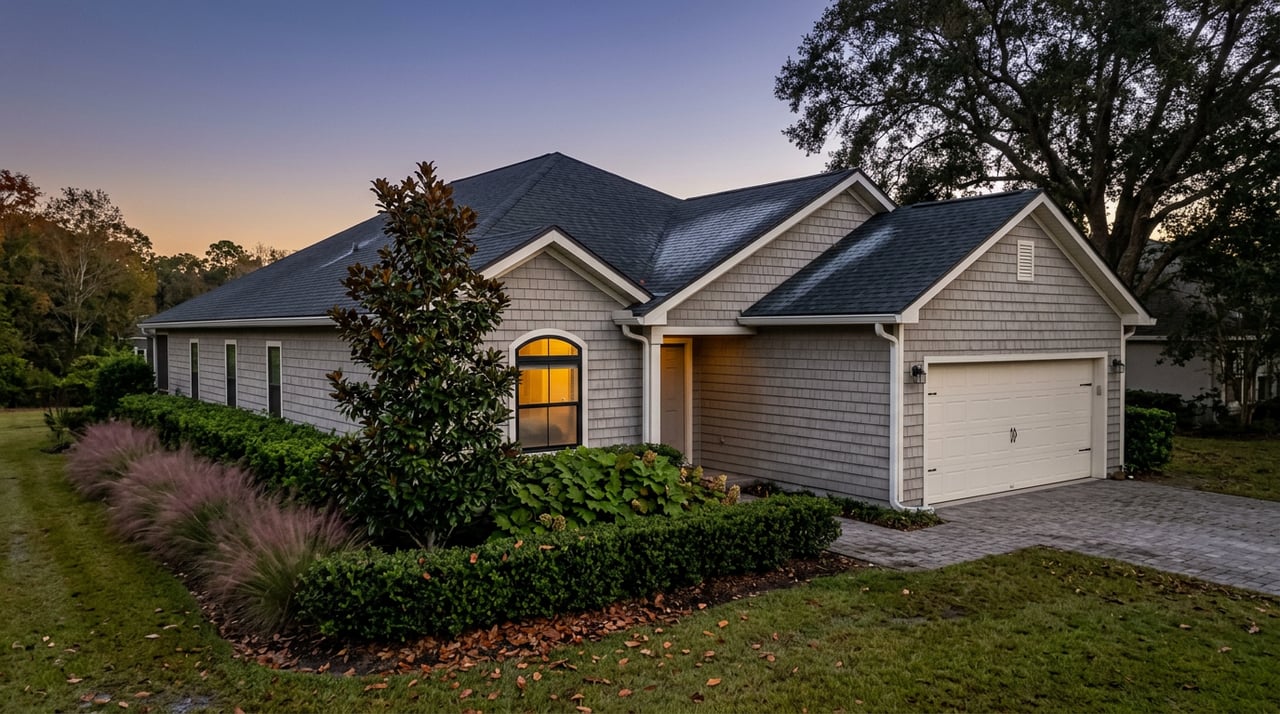
The Virginia Beach Median Price Is Ten Housing Markets Wearing One Number
September 17, 2026
September 17, 2026
Every market update this year has said some version of the same sentence: Virginia Beach home prices are up, and buyers should move quickly. The sentence is true and almost useless on its own. The city's median sale price sat at $430,000 over the three months ending July 2026, up 7.4 percent from the year before. That single figure describes a city that Virginia Beach itself divides into ten council districts for the purpose of valuing property, and according to the city's own Real Estate Assessor, those ten districts did not move together.
In the fiscal year covered by the assessor's most recent Annual Report, presented to City Council on February 24, 2026, citywide median residential appreciation came in at 5.29 percent. Neighborhood-level appreciation for that same period ranged from roughly negative 6 percent to more than positive 25 percent. That is a spread of over thirty points between neighborhoods inside the same city limits, in the same twelve months. A buyer comparing "Virginia Beach" against another metro on a portal never sees that spread. It exists in a government report most people never open.
Virginia Beach's Real Estate Assessor's Office values every parcel in the city each year and organizes the results by ten council districts, then publishes both an Annual Report and a separate Residential Neighborhoods Report showing average assessment change by neighborhood. The most recent Annual Report puts the city's total taxable property assessment at $92.3 billion, a 6 percent increase over the prior year, with growth recorded across all ten districts rather than concentrated in one or two hot spots.
That citywide growth number, though, sits on top of real divergence underneath it. About 70 percent of homes in the city are assessed between $250,000 and $499,000, which is the range most buyers are actually shopping in. New construction tells a different story: 86 percent of newly built homes are valued above $350,000, and a third of them exceed $1 million. No home completed in 2025 was assessed below $250,000. New supply is being built at the top of the market even while most existing inventory sits well below it, which means the entry-level buyer and the new-construction buyer are effectively shopping in two different price tiers of the same city.
Here is the part that surprises most buyers once they see it laid out. The district with the most total assessed value is not the district growing the fastest.
Value and growth are two different measurements, and the city's own data shows them pointing at different neighborhoods. A district can carry enormous total assessed value because it has been expensive for decades, including waterfront property and long-established housing stock, while a different district posts faster year-over-year appreciation because it is catching up from a lower starting point or absorbing new demand it didn't have five years ago. Neither pattern is better. They answer different questions. One tells you where the money already is. The other tells you where it's moving.
The assessor's office has been direct about the mechanism behind this. As Yahoo News reported, when the fiscal year 2026 assessments were released, Assessor Sue Cunningham told City Council:
"Values will continue to appreciate until inventory loosens up a little bit and interest rates reduce a bit for us as well."
That statement points to two forces that don't hit every district evenly: inventory tightness and financing conditions. Both interact with what's specific to each corridor. Areas close to NAS Oceana, Joint Expeditionary Base Little Creek-Fort Story, and Dam Neck Annex see steadier demand because military relocation timelines don't pause for interest rate cycles the way discretionary moves do. Areas closer to Town Center and the oceanfront corridor see demand driven more by rental turnover and lifestyle buyers who prioritize walkability over square footage. Those are different buyer pools with different urgency, and they don't necessarily move at the same pace in the same year.
There's also a timing mechanic worth understanding if you're staring at an appreciation percentage today. Assessed values are calculated from sales that already closed in the district, not from what's happening on the market right now. A neighborhood's appreciation number in any given assessor's report is a look backward, which is exactly why a district can show strong appreciation on paper while its current listings feel slower or faster than that number suggests.
The uneven appreciation picture matters more right now than it would in a looser market. As of the most recent verified figures for August 2026, Virginia Beach's detached home inventory sits at about 2.1 months of supply, still the tightest of any city in Hampton Roads even as Chesapeake and Suffolk have loosened somewhat over the same stretch. Under five to six months of supply generally favors sellers, and 2.1 months is well under that.
That tightness is not distributed evenly across the ten districts any more than appreciation is. A buyer treating "Virginia Beach inventory is tight" as one fact for the whole city will misjudge how much room they actually have to negotiate or wait in the specific district they're targeting. In a district near the top of the appreciation list, waiting an extra month to compare more listings costs more than it would in a district that's appreciating closer to the citywide average. The same city-level headline hides a different amount of urgency depending on where you're actually looking.
Which council district is my target neighborhood in, and does it matter? The assessor's office publishes neighborhood-to-district mapping through its own Residential Neighborhoods Report, and it's worth checking before you assume. Neighborhoods don't always line up neatly with district boundaries. Some communities span more than one district, and the city assigns the whole neighborhood based on where most of its parcels fall. Knowing your actual district lets you compare your target area against the appreciation and value figures that apply to it, rather than a citywide blend that may not resemble it at all.
Does a higher assessed value automatically mean stronger appreciation? No, and that's the core finding here. District 6 and District 8 carry the city's highest total assessed values, but neither led the city in appreciation rate for the most recent fiscal year. High value reflects an established, often waterfront market. Fast appreciation reflects a district that's still catching up or absorbing new demand. A buyer chasing long-term equity growth and a buyer chasing an established, high-value setting may reasonably choose different districts.
Does Virginia Beach offer its own down payment assistance program? Virginia Beach is the one city in the immediate Hampton Roads region without a city-level down payment or closing cost assistance program of its own, unlike Chesapeake, Portsmouth, and Norfolk. Buyers here typically rely on Virginia Housing's state-level programs, including a down payment assistance grant of up to 2.5 percent of the purchase price that doesn't need to be repaid, plus a separate closing cost assistance grant. Worth confirming current eligibility and terms directly with a lender before assuming what applies to your situation.
The citywide median is a real number and it's not wrong. It's just an average of ten places that aren't behaving the same way this year, built from a report the city already publishes but rarely gets read outside of budget season. If you're comparing Virginia Beach neighborhoods on price alone, you're comparing an average to a specific place, and the gap between those two things is exactly where a bad decision hides.
If you want to know what your specific district is actually doing right now, not what the city as a whole is doing, that's a conversation worth having before you make an offer. Michael Rowland works these micro-markets daily and can walk you through what a given district's numbers actually mean for your budget and timeline. Start your tailored market consultation whenever you're ready to look past the headline.
This article is general information, not legal, tax or financial advice. Consult a qualified professional about your situation.
Stay up to date on the latest real estate trends.

We pride ourselves on providing personalized solutions that bring our clients closer to their dream properties and enhance their long-term wealth. Contact us today to find out how we can be of assistance to you!